
Origin: The Anarkali dress originated in the Mughal era of India, specifically during the reign of Emperor Akbar in the 16th century. It was named after the famous dancer Anarkali, who was known for her beauty and grace.
Royal Connection: The Anarkali dress was initially designed for royal women and was worn by the ladies of the Mughal court. It was considered a symbol of elegance and sophistication.
Silhouette: The Anarkali dress is characterized by its flowing silhouette and flared shape. It typically consists of a fitted bodice and a long, voluminous skirt that flares out from the waist, creating a beautiful and graceful look.

Fabrics and Embellishments: Originally, Anarkali dresses were made from rich and luxurious fabrics like silk, velvet, and brocade. These fabrics were often adorned with intricate embroidery, zari work, and embellishments such as beads, sequins, and stones to enhance their beauty.
Evolution: Over time, the Anarkali dress has evolved to incorporate various design elements and influences from different regions. Today, it is available in a wide range of fabrics, colors, and patterns, catering to different tastes and occasions.
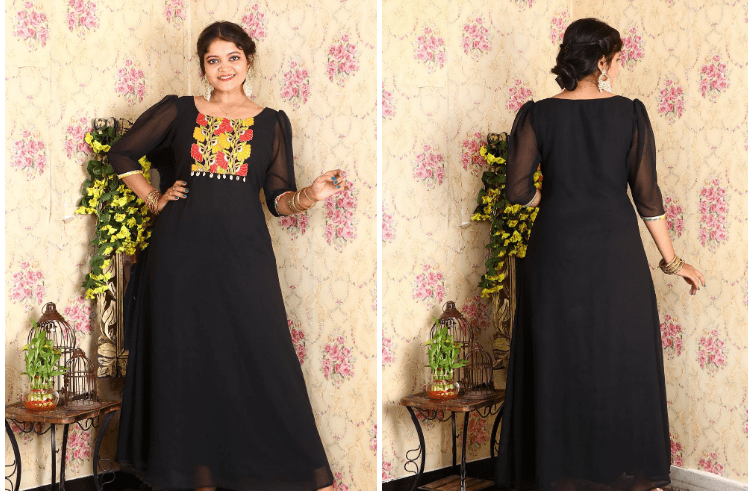
Length and Styles: Rajkumari Anarkali dresses can vary in length, ranging from knee-length to floor-length. They are available in different styles, including traditional, contemporary, and fusion designs, allowing for versatility and experimentation.
Popularity: The Anarkali dress gained popularity not only in India but also internationally. It has become a fashionable choice for formal events, weddings, festivals, and parties, with many celebrities and fashion designers embracing its timeless appeal.
Global Influence: The Anarkali dress has inspired fashion trends worldwide. It has influenced Western fashion, with designers incorporating the Anarkali silhouette into their collections, showcasing the dress’s cross-cultural appeal.

Fusion Variations: Fusion variations of the Anarkali dress have emerged, combining elements from other cultures and styles. For example, Indo-Western Anarkali dresses blend traditional Indian designs with Western cuts, creating a unique fusion look.
Enduring Appeal: Despite evolving fashion trends, the Anarkali dress has maintained its popularity and continues to be a preferred choice for women seeking an elegant and feminine outfit. Its timeless charm and versatility have made it a classic ensemble in the world of fashion.

 Instant Approval Guest Posting Website