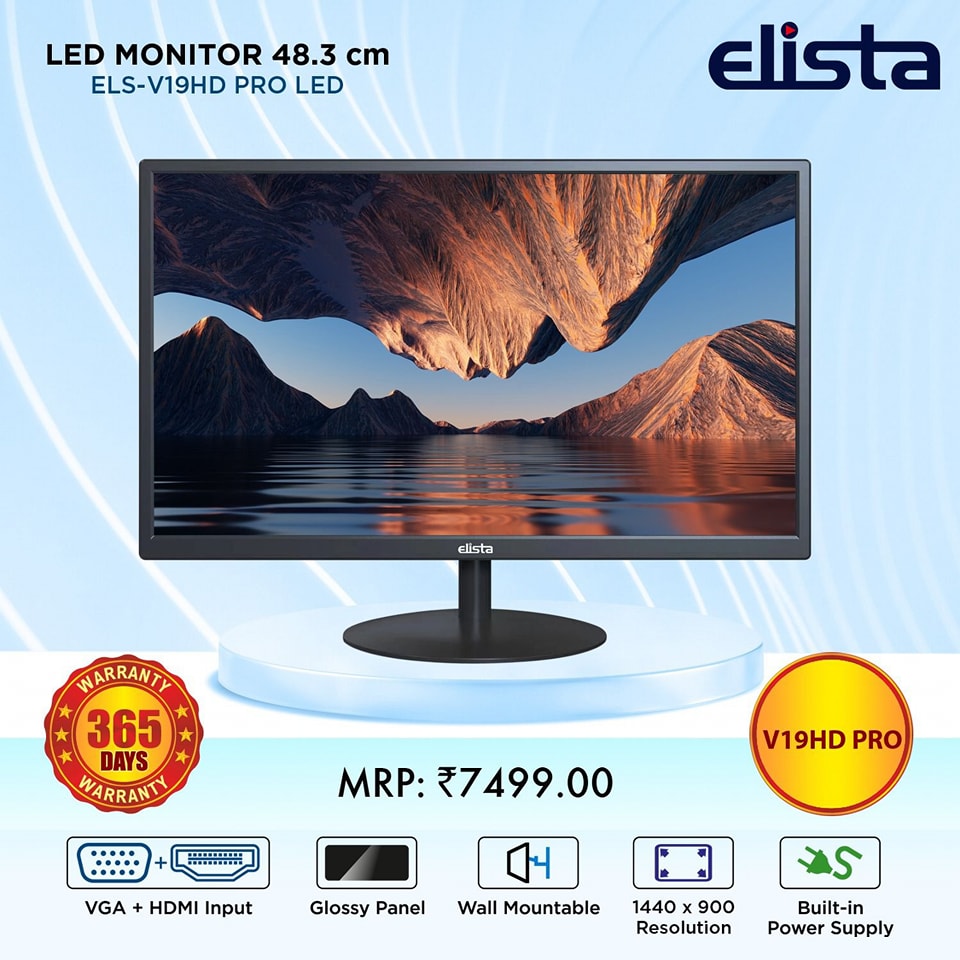
LED (Light Emitting Diode) monitors are a popular type of display technology used in computer monitors and TVs. They offer several advantages over older display technologies such as CRT (Cathode Ray Tube) and LCD (Liquid Crystal Display). Here’s everything you wanted to know about LED monitors:
LED Backlighting: LED monitors use light-emitting diodes as a backlight source behind the screen. This backlighting provides illumination to the LCD panel, allowing you to see the images on the screen. LEDs offer several benefits over traditional CCFL (Cold Cathode Fluorescent Lamp) backlights used in LCD monitors, including improved energy efficiency, better colour reproduction, and thinner displays.
Energy Efficiency: LED monitors are more energy-efficient compared to their counterparts. LEDs consume less power, resulting in lower electricity bills and reduced environmental impact.
Display Quality: LED monitors generally offer excellent display quality with high brightness levels and better contrast ratios compared to older display technologies. They can produce vibrant colors, deep blacks, and sharp images, making them ideal for various applications such as gaming, multimedia, and professional use.
Thinner and Lighter: LED monitors are thinner and lighter compared to older display technologies. The LED backlighting allows for a slimmer profile, making the monitors sleek and aesthetically pleasing. This feature also makes LED monitors more portable and easier to mount on walls or adjustable stands.
Durability: LEDs have a longer lifespan compared to CCFL backlights. They are more durable and resistant to shocks and vibrations, making them suitable for rugged environments.
Response Time: LED monitors typically have faster response times compared to older display technologies. A lower response time means faster pixel transitions, resulting in reduced motion blur and smoother video playback, which is beneficial for gaming and fast-paced content.
Types of LED Monitors: LED monitors can be categorized into two main types:
a. Edge-Lit LED Monitors: In these monitors, LEDs are placed along the edges of the screen and use light guides to distribute the light evenly across the display. Edge-lit LED monitors tend to be thinner and lighter but may have slightly uneven lighting towards the edges.
b. Full-Array LED Monitors: In these monitors, LEDs are placed behind the entire screen, providing more uniform backlighting and better control over local dimming zones. Full-array LED monitors generally offer improved contrast ratios and more accurate local dimming capabilities.
Connectivity: LED monitors typically feature multiple input options, including HDMI, DisplayPort, DVI, and VGA, allowing you to connect them to various devices such as computers, laptops, gaming consoles, and media players.
Resolution and Size: LED monitors are available in a wide range of sizes and resolutions to suit different needs and preferences. Common resolutions include Full HD (1920×1080), Quad HD (2560×1440), and Ultra HD/4K (3840×2160). Larger screens and higher resolutions provide more screen real estate and sharper details.
Eye Care Features: Many LED monitors come with eye care technologies such as flicker-free backlighting and blue light filters to reduce eye strain and fatigue during extended use.
LED monitors have become the standard in the display industry due to their energy efficiency, excellent image quality, slim design, and other advantages. When purchasing an LED monitor, consider factors like screen size, resolution, response time, connectivity options, and additional features to find the best fit for your specific needs.

 Instant Approval Guest Posting Website